A technical overview of quaternary ammonium surfactants by Norman Lowe, Senior Technical Consultant HPC and Industrial at HARKE UK & Ireland.
Quaternary Ammonium Surfactants are a class of cationic surfactants, commonly abbreviated as Quats. Chemically, they are defined by the structure R4>N+, where R is any carbon chain.
Quats are used extensively in both the cosmetic and non-cosmetic markets, for example in hair conditioners and fabric conditioners. They are substantive to any anionic-charged substrate, such as hair, fibres, skin, and hard surfaces. They have conditioning and in some cases biocidal properties.
Quats are mainly produced by the reaction of a tertiary amine with an Alkyl or Aryl chloride, such as Methyl chloride, thus:
R3N + ClCH3 = R3N+ CH3 . Cl-
Example: Stearyl dimethyl ammonium chloride
An alternative system uses a tertiary amine with Dimethyl Sulfate, producing methosulfate quats:
R3N + (CH3)2HSO4 = R3N+CH3 . CH3HSO4–
Example: Behenyl trimethyl ammonium methosulfate
Conditioning Cosmetic Quats
These contain at least one long carbon chain, usually C16 (Cetyl), C18:1 (Oleyl or Stearyl (C18)), or longer C22 (Behenyl). Alternatively, they may have two long chains, again mainly Stearyl or Oleyl, with the other R groups normally being Methyl (CH3) or Ethyl (CH2H5).
Examples: Mackernium® BTAC or Mackernium® BTMS (read more about these two Verdant ingredients here)
An Aryl group can also be included using Benzoyl chloride as the reactant, e.g, Stearalkonium chloride (Mackernium SDC-85), or the Methosulfate variant, Stearalkonium Methosulfate.
The nitrogen group of vegetable proteins can be quaternised to make excellent skin and hair conditioners, for example, Cocodimonium Hydroxypropyl Hydrolysed Wheat protein (Vegequat by Sinerga). Other vegetable proteins are used, such as rice and even silk. These products are also anionic compatible, so they can be used in 2:1 conditioning shampoos.
A specific range of cationic conditioning polymers are the ‘Guar derivatives’. Basic guar gum is reacted with Hydroxy propyl dimethyl amine, which is then quaternised with Methyl chloride, for example. By altering the chain length and degree of substitution, a whole range of derivatives with various properties can be formed (such as the Jaguar® and Naternal™ ranges from Syensqo).
Polyquaternium products come in many forms, usually based on derivatives of (for example) poly acrylic acid or acrylamide. These polyquats are normally anionic compatible, giving them scope for use in 2:1 shampoos. Examples include:
- Polyquaternium-7 (Linkquat PQ-7 by HARKE UK), which is a Di-methyl diallyl ammonium chloride acrylamide co-polymer.
- Polyquaternium-10 (Mackernium® HQ 400 by Verdant), which is quaternised Hydroxyethyl cellulose.
Conditioning Non-Cosmetic Quats
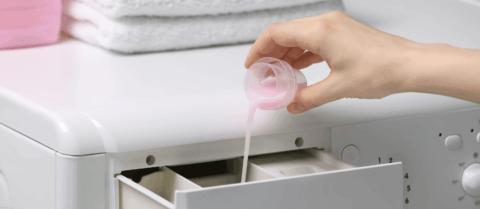
In the past, Di-stearyl dimethylammonium chloride (DSAC) was used as the main fabric conditioning quat. It was very effective but is no longer used because of poor biodegradability (the Detergent Regulation covers fabric conditioners, even though they are not technically detergents). To replace DSAC for fabric conditioners, two types were developed. Firstly, the Imidazoline based quats, such as di-Stearyl dimethyl imidazoline methosulfate, were used in major retail fabric conditioners. However, simpler and easier to process molecules have been developed, known as Ester Quats. These are based on dialkyl derivatives of methyl diethanolamine and triethanolamine (mainly triethanolamine), usually the methosulfate derivatives, such as:
R2(OC2H2)2. OHC2H2).N+ CH3. CH3HSO4–
Example: Bis(Stearyloxyethyl) Hydroxyethyl Methylammonium methosulfate
They are often just referred to as ‘TEA ester quats’. The di-oleyl version can be cold processed, while the di-stearyl version needs hot processing.
The main problem with the ester quats is the viscosity of lower active solutions. For example, 3-5% actives (standard retail fabric conditioner) are very thin and require thickening to give better flow characteristics; this is best done using a cationic polymer thickener (Linkquat FS by HARKE UK). The positive side is that higher active concentrates can be easily produced and will remain liquid even at quite high concentrations, which are becoming popular (less packaging, smaller unit dosing, etc.).
There are variants of these products, such as alkyl chain mixtures, but the basic principle remains the same: a biodegradable, effective fabric conditioner.
Esterquats have other advantages; they do not build up on cloth fibres and therefore do not contribute to yellowing or potential waterproofing.
Disinfectant Quats
The other main non-cosmetic quat area is the ‘Disinfectant Derivatives’. Several types are available. The most common single-chain products are the alkyl dimethyl benzyl quats, commonly referred to as Benzalkonium chloride (BAC). The alkyl chain length is very important, with optimum biocidal performance at the C12 to C14 level. These products are based on Coconut or Palm Kernel (mainly C12, C14) or narrower chain cuts that remove the C8 and C10 chain lengths. All of these derivatives are listed on Article 95 of the BPR.
There are also single-chain products that do not have the benzyl group, such as Alkyl Dimethyl Ammonium Chlorides. These do not have quite the same performance as the BAC types and are used for other purposes, such as dye levelling agents in textiles.
A very active twin-chain quat is Di-decyl(C10) Dimethyl Ammonium Chloride (DDAC), which performs as well as the BAC types and is often used in admixture with BAC. One example of this is Actizone® F5 Concentrate from Syensqo, which is available through HARKE UK.
The other notable product is Chlorhexidine Digluconate, commonly known as Hibitane. This product is heavily used as a skin disinfectant (e.g., Hibiscrub) in hospitals and veterinary practices as a surgical scrub, typically as a 4% solution with co-cleaning surfactants (Amine oxide, something like Mackamine® LA, and alkoxylates).
All the above biocidal quats offer a very broad spectrum of kill, covering bacteria, fungal moulds, and yeasts, and are supported on the BPR for PT 1 (in some cases), PT2, PT3 (in some cases), and PT4. They cannot, however, be used in agriculture and are deactivated by anionic and even larger amounts of non-ionic surfactants.
Other Applications
A major property of some cationic derivatives is the ability to repel water from surfaces. This works well in vehicle rinse aids. After cleaning, a solution of a cationic base surfactant, usually in admixture with a hydrophobic oil, an ester, or simply other surfactants, gives a water-repellent surface, leading to a ‘beading effect’ similar to a wax polish. These products are referred to as Spray Waxes (Linkspray 4NL and Linkspray 3NL ECO by HARKE UK) or a wash and wax concentrate (Link CWW by HARKE UK). These products contain either the di-oleyl TEA Ester quat or a di-cocodimethyl ammonium chloride (Addsurf -4 by HARKE Addi-Tec).
For a polymer wax polish that repels water from windscreens and can be formulated into a simple-to-apply substantive spray polish, a quaternised silicone derivative is used (Flexipel Q-50 by ICT). This product is substantive to many surfaces and can, when formulated with other products, give a high gloss polish to vehicles or household surfaces such as bathroom and kitchen tiles, polished wood, and leather. When used on its own, it can provide a water-repellent surface to car windscreens.
Quaternised alcohol ethoxylates are used in many cleaning products, usually in optimised admixtures with ethoxylates, to give high-level degreasing properties. These products tend to be anionic compatible and are used in traffic film removers, hard surface cleaners, kitchen degreasers, and more (such as Link 706 by HARKE UK).
HARKE UK & Ireland is able to supply quats into most application areas. Where we do not have a product in our portfolio, we can still help customers to formulate, backed up by experience and expertise, and advise customers on the best products to use to give optimum performance.